What Is Compound Interest?
Compound interest is the process of earning interest not only on the money you originally invested, but also on the interest that builds up over time.
In simple terms, your money begins earning money on itself.
This is why compound interest is often described as one of the most powerful tools for long-term investing and wealth building because it makes not only your initial asset, the principal sum, but also the interest on that sum work for you.
If you add further lump sum amounts to your original investment sum, the compounding effect of the interest further enhances and the cumulative effect is a much higher growth to your money over time.
The contrast is a simple interest rate. A simple interest rate is just applied to your original investment amount and does not take into account any interest that was accrued in that time.
How Compound Interest Works?
An easy example to highlight how compound interest builds wealth compared to simple interest is if we use the following figures. Let us assume you have £10,000 to invest as your initial amount and you choose to invest it for 10 years. (Easy rounded figures to use for our example). Now, you find a savings account that gives you 10% simple interest on this, your savings will grow to £20,000. However, if this was compound interest instead, your savings would have grown to £25,937.42.
The key aspect of compound interest is that the longer an investment, the greater the degree of rise of the final amount of growth occurs. Using our example above again, if we extended the time to 20 years, the simple interest end saving balance would be £30,000 and the compound interest account saving balance would be a staggering £67,272!
For example:
Year 1:
£10,000 invested at 10%
= £11,000
Year 2:
10% interest is now earned on £11,000
= £12,100
Year 3:
Interest is earned on £12,100
= £13,310
Instead of earning interest only on your original £10,000, you are also earning interest on previous interest earned.
This is the key difference between simple interest and compound interest.
Compound Interest Formula. The mathematics behind the results:
The standard compound interest formula is:
Simple Interest vs Compound Interest
Simple interest only earns interest on the original amount invested.
Compound interest earns interest on:
- the original investment
- previous interest earned
Over short periods the difference may seem small, but over many years compound growth can become substantial.
Why Compound Interest Matters
Compound interest rewards:
- time
- consistency
- patience
The earlier you begin investing, the more time compounding has to work.
Even small monthly contributions can grow into meaningful amounts over long periods.
This is why many investors focus on:
- long-term investing
- regular contributions
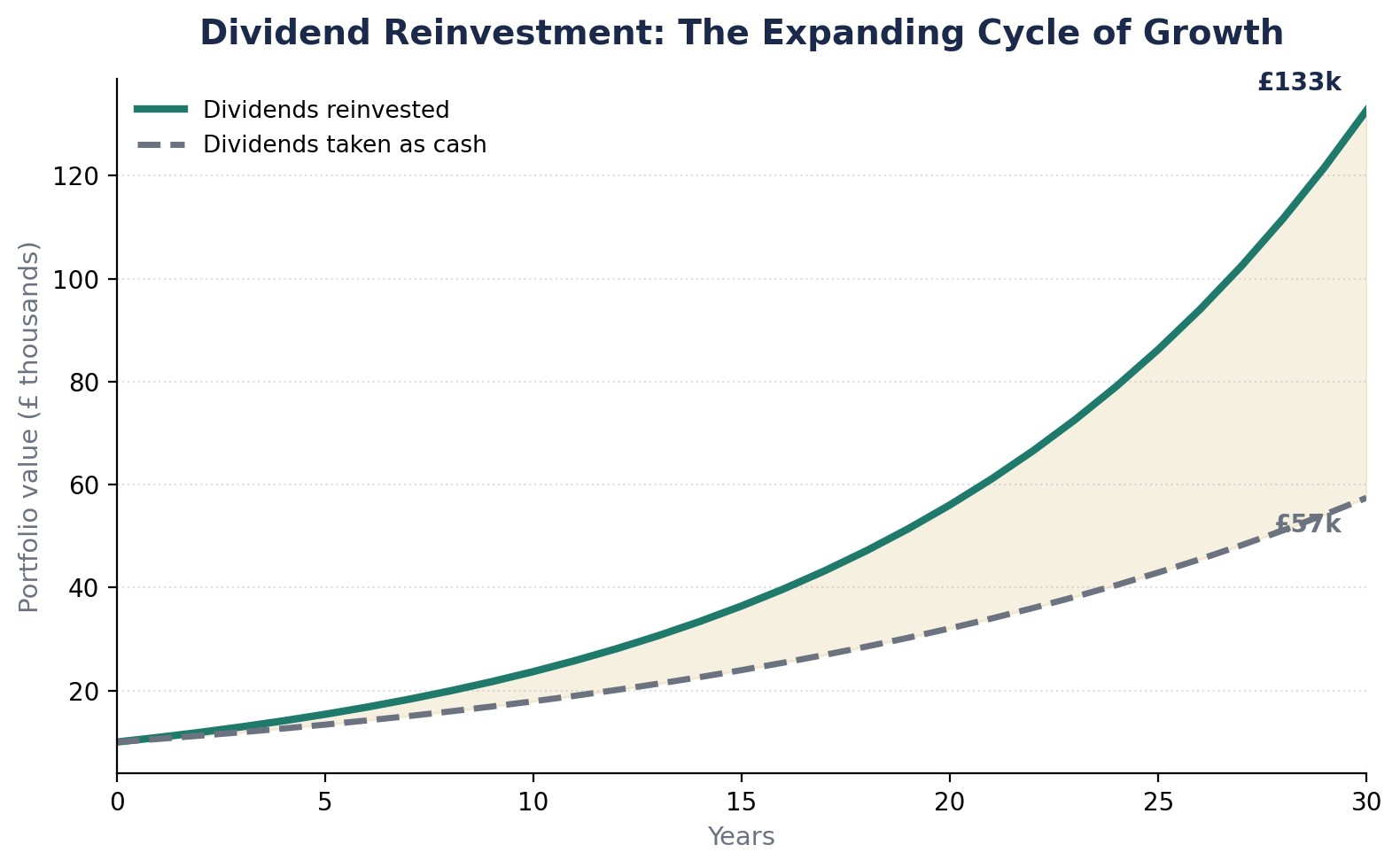
- reinvesting returns
The Power of Time
One of the most important aspects of compound interest is that growth accelerates over time.
In many cases:
- the final years produce the largest gains
- investment growth eventually exceeds contributions
- returns begin generating their own returns
This is why starting early can make a major difference.
For example:
£100 invested monthly for 30 years
can grow significantly larger than
£200 invested monthly for 10 years
Time is often more powerful than the size of the initial investment.
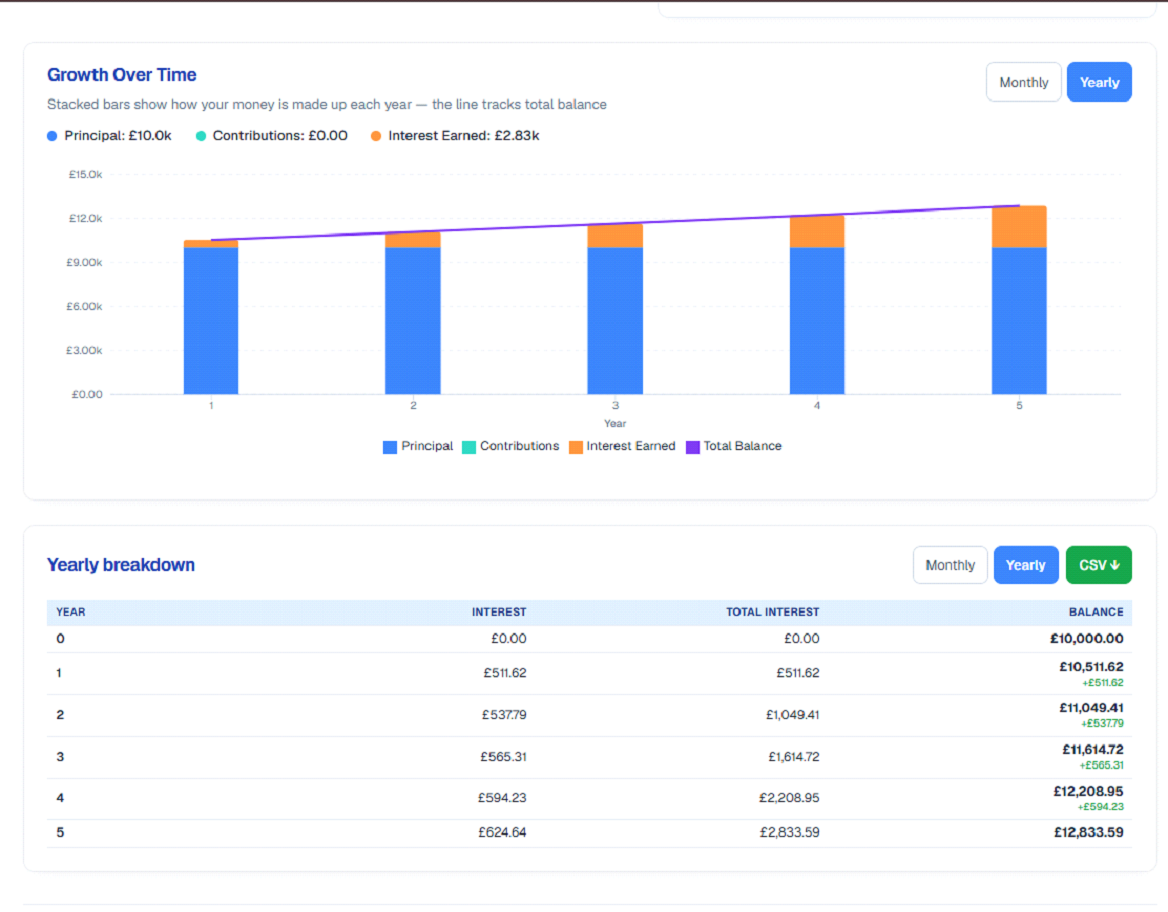
You can use the calculator to see these results with your own eyes. The graphs help visualise the power of the gains over time. Watch the dramatic steep rise in the growth curves as time period increases.
Compound Interest and ISAs
In the UK, compound interest can become even more effective when investments are held inside an ISA (Individual Savings Account).
An ISA allows your:
- interest
- dividends
- investment gains
to grow tax-free.
This means more of your returns remain invested and continue compounding over time.
For long-term investors, this tax efficiency can make a substantial difference to overall returns.
Inflation and Compound Growth
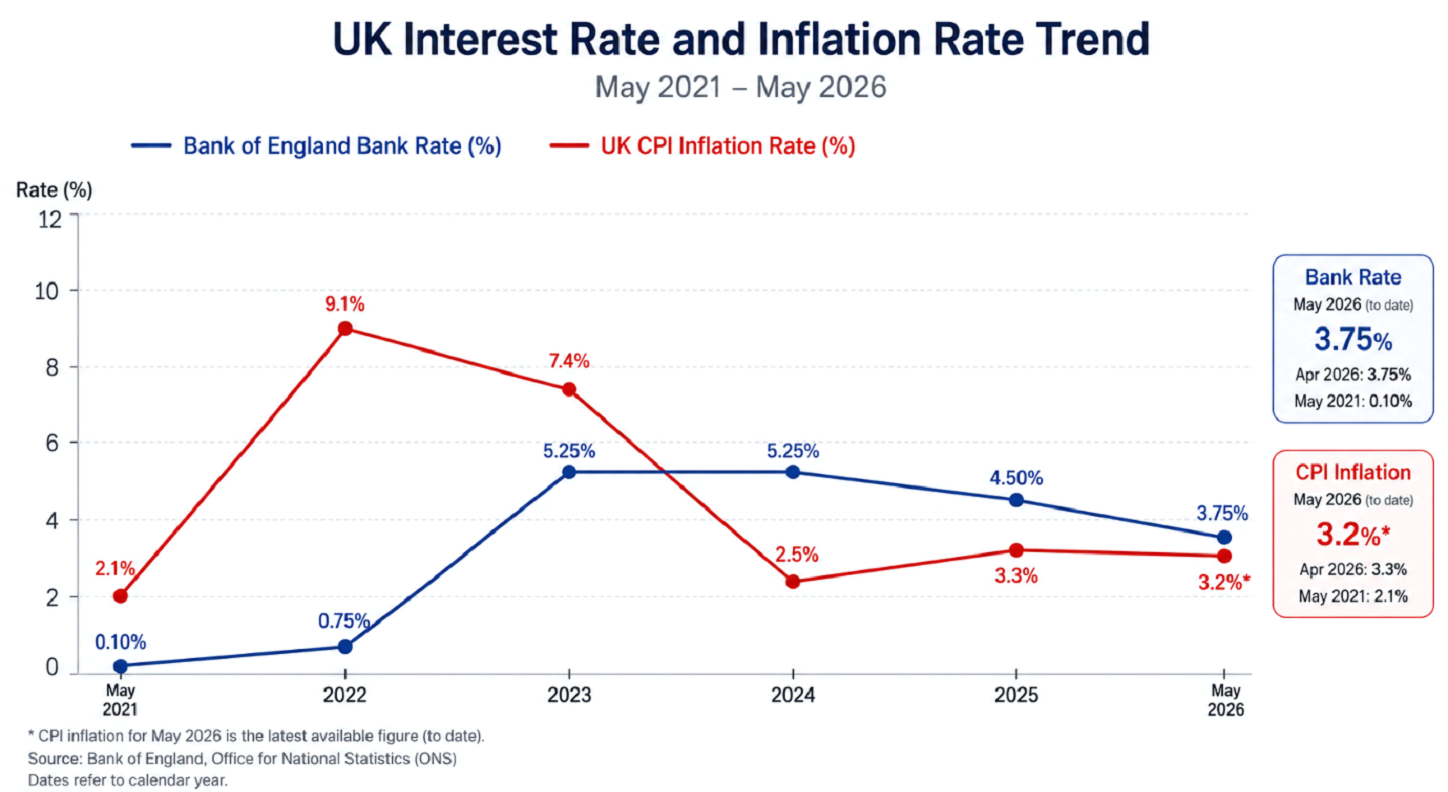
Inflation reduces the purchasing power of money over time.
For example, £100 today may buy less in 20 years due to rising prices.
Compound growth can help offset the effects of inflation by increasing the value of your investments faster than inflation reduces spending power.
This is one reason many people choose investing over holding cash long term.
Daily vs Monthly Compounding
Interest can compound at different frequencies, including:
- daily
- monthly
- quarterly
- yearly
More frequent compounding slightly increases returns because interest is added to the balance more often.
For example:
- daily compounding generally produces slightly higher returns than monthly compounding
- monthly compounding produces slightly higher returns than yearly compounding
The difference becomes more noticeable over long periods rather than short time periods.
What Is APY?
APY stands for Annual Percentage Yield.
It represents the true yearly return on an investment after accounting for compound interest.
APR (Annual Percentage Rate) shows the basic yearly rate, while APY includes the effect of compounding.
This makes APY more useful when comparing savings accounts and investments.
Key Takeaways
Compound interest is one of the most effective ways to grow wealth over time.
The key principles are simple:
- start early
- invest consistently
- stay invested long term
- reinvest returns
- minimise unnecessary tax
Over time, compound growth can transform small regular investments into substantial long-term wealth.
Try Our Compound Interest Calculator
Use our compound interest calculator to estimate:
- future investment growth
- monthly contribution impact
- ISA tax-free growth
- inflation-adjusted returns
- daily or monthly compounding scenarios
Small changes in time, contributions, and interest rate can have a major impact on long-term results.